Movies Like
Movies Like A Quiet Place: Horror That Runs on Restraint
By Jordan A. · · Updated · 5 min read
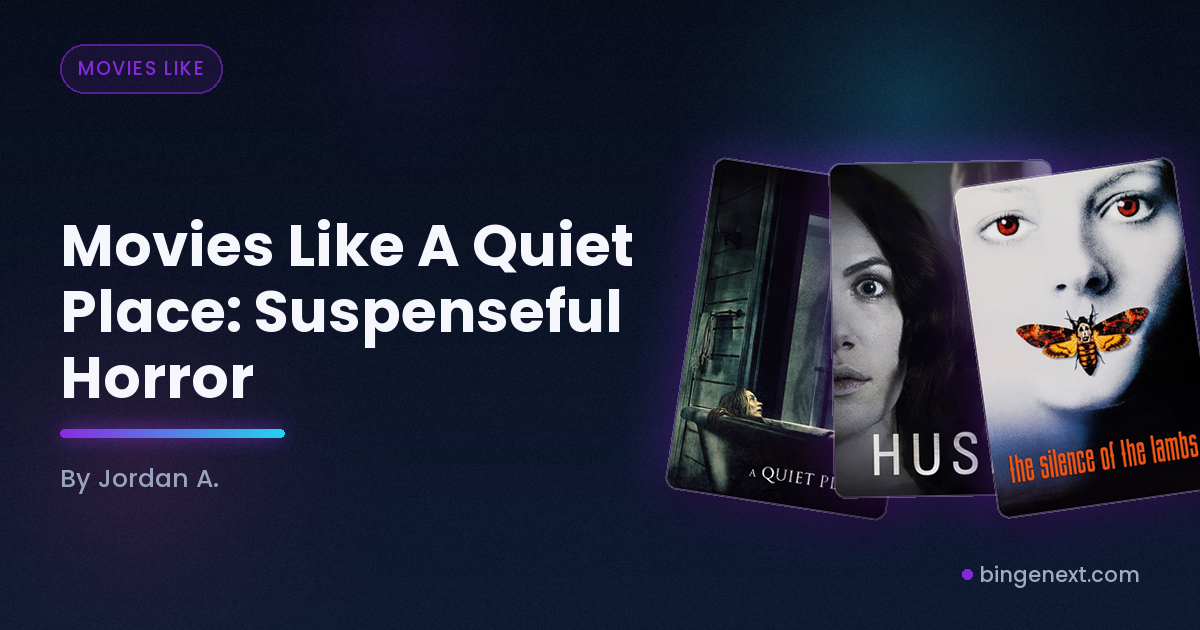
A Quiet Place (2018, John Krasinski, 90 minutes) is ninety minutes long and it barely speaks. That is the whole trick. Take away dialogue and the audience starts listening to the room, so every creak in the floorboards does the work a jump scare would normally have to do.
Horror that runs on restraint is a small category and a lot of lists pad it out with films that are merely tense. These are picked for the actual technique: silence, withheld information, or a monster the camera refuses to show. Years, directors and runtimes are listed, and where each streams changes, so the title page on BingeNext shows current US options.
If you want silence as the mechanic
Hush (2016, Mike Flanagan, 81 minutes) is the tightest film on this list. A Deaf writer alone in a woodland house, a man in a mask outside, and almost no dialogue for the middle hour. It shares the premise that sound is the currency of survival. The difference is that it is a home invasion thriller with no science fiction at all, and it is over in under ninety minutes. Choose it if you want the purest version of the idea.
No One Will Save You (2023, Brian Duffield, 93 minutes) is a home invasion by aliens with essentially one line of spoken dialogue in the entire film. It shares the silence and the single-location pressure. The difference is that the reason for the heroine's isolation is social rather than apocalyptic, and the ending is divisive. Choose it if you want something recent that genuinely commits to the gimmick.
A Quiet Place Part II (2020, John Krasinski, 97 minutes) picks up minutes after the first film and opens with the day of the invasion, which the original never showed. It shares everything, obviously. The difference is that it splits the family and becomes more of an adventure film. Choose it if you want the direct continuation. A Quiet Place: Day One (2024, Michael Sarnoski, 99 minutes) is the prequel set in Manhattan, and it is the most character-driven film in the series, with a cat.
If you want the creature you never see
Bird Box (2018, Susanne Bier, 124 minutes) inverts the premise: here it is sight that kills, and despite how often it gets described as a series, it is a single feature film starring Sandra Bullock. It shares the sensory-deprivation survival structure and the parent-protecting-children spine. The difference is that it is structured as a river journey with flashbacks. Choose it if the premise is what you liked more than the execution.
Signs (2002, M. Night Shyamalan, 106 minutes) is a farmhouse, a family and an invasion mostly heard on a baby monitor. It shares the small-scale approach to a global event, which is the thing A Quiet Place is really doing. The difference is that it is about faith, and the ending divides people to this day. Choose it if you want the film A Quiet Place is most obviously descended from.
10 Cloverfield Lane (2016, Dan Trachtenberg, 104 minutes) locks three people in a bunker and refuses to tell you whether the threat is outside or in the room. It shares the withheld information. The difference is that the tension is interpersonal for most of the runtime. Choose it for the best performance on this list, which is John Goodman's.
If you want dread rather than shocks
It Comes at Night (2017, Trey Edward Shults, 91 minutes) is about two families sharing a house after an unspecified plague, and the title is a promise the film deliberately breaks. It shares the family-under-siege setup. The difference is that there is no monster to point at, which made a lot of people angry. Choose it if you want the bleakest entry.
The Witch (2015, Robert Eggers, 92 minutes) is a 1630s New England family unravelling on the edge of the woods, in period dialogue that takes ten minutes to tune into. It shares the isolated-family structure and the patience. The difference is that the horror is theological. Choose it if atmosphere matters more to you than pace.
The Others (2001, Alejandro Amenabar, 104 minutes) is a mother and two light-sensitive children in a fogbound house, and it is built entirely out of closed doors and drawn curtains. It shares the rule-based household where breaking the rule is fatal. The difference is that it is a ghost story with a twist. Choose it if you want a horror film you could watch with your parents.
Under the Skin (2013, Jonathan Glazer, 108 minutes) is the least conventional recommendation here and the one worth the risk. Scarlett Johansson drives a van around Glasgow, and the film explains nothing. It shares the commitment to sound and image over exposition, and Mica Levi's score is doing what the silence does in A Quiet Place. The difference is that it is art cinema and it does not care whether you follow.
Don't Breathe (2016, Fede Alvarez, 88 minutes) flips the polarity: three burglars break into the house of a blind veteran, and he turns out the lights. It shares the sound-as-survival mechanic exactly, from the other side. The difference is that there is nobody to root for. Choose it if you want the nastiest thrill ride here.
Where to start
If you want the closest match, start with Hush. If you want the family and the invasion, start with Signs. If you want to be unsettled for a week, It Comes at Night. And if you want to be genuinely surprised, it is Under the Skin.
If you want something matched to the mood you are actually in tonight, tell BingeNext mood recommendations what you want and you will get a shortlist with a reason for each pick and where it streams. It takes about a minute.
Topics covered: horror, thriller, suspense, innovative, family-drama, contemporary
About the author
Jordan A., Founder, BingeNext
Jordan A. is the founder of BingeNext and is responsible for every guide published on this site. He built the recommendation engine after one too many nights lost to the streaming menu. Dates, season counts and where-to-watch details in these guides are checked against official sources before publishing, and corrections are welcome at Jordan@Bingenext.com.