Ideas
Why Some Titles Refuse to Leave the Netflix Top 10
By Jordan A. · · 4 min read
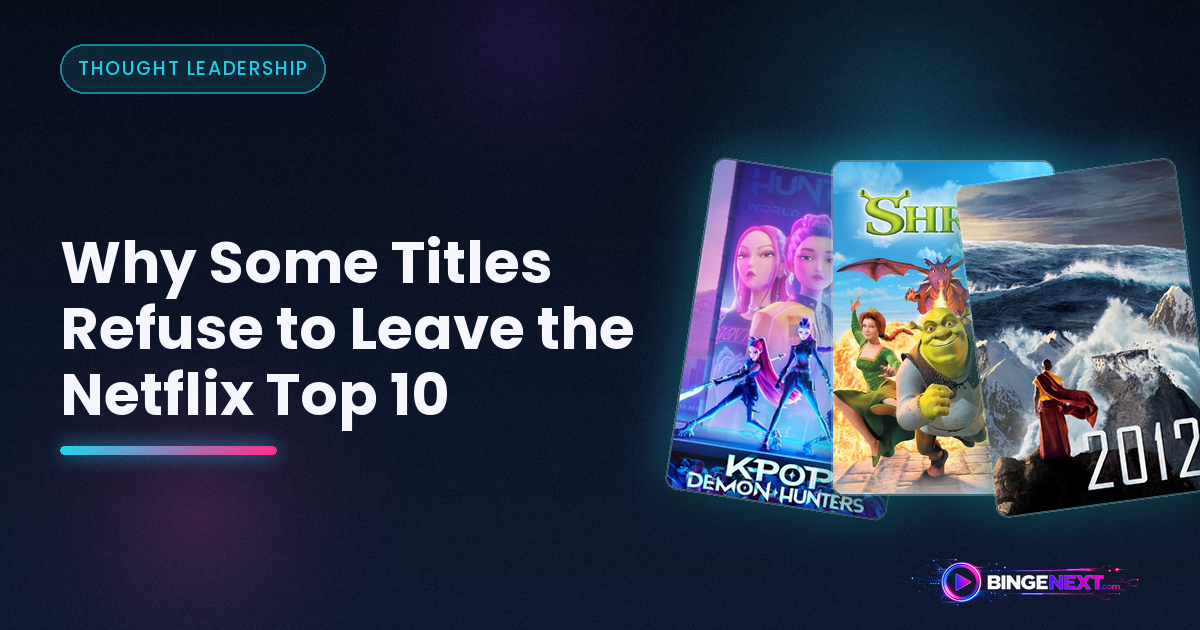
Look closely at the Netflix movies Top 10 for the week of August 24 and something odd jumps out. KPop Demon Hunters was still there at number eight, in its sixty-third week on the chart. Shrek, a film from 2001, sat right below it at number nine in week sixteen. The 2012 disaster movie rounded out the list. Brand new releases came and went above them, but these titles simply refused to leave. That stubbornness says a lot about how streaming actually works, and it is worth understanding. What keeps a title on the chart for months is rarely luck, and once you see the pattern you cannot unsee it, in your own watching most of all.
We tend to picture the charts as a running tally of the newest, buzziest thing. A lot of the time they are the opposite, a snapshot of what people return to when they do not want a gamble. The titles that never leave are not accidents. They are doing a specific job for the people who keep pressing play.
Comfort beats novelty more often than the industry admits
A huge share of viewing is not discovery at all. It is comfort. When the day was long and the decision-making is done, people reach for the thing they already know they love, and a movie like KPop Demon Hunters or Shrek delivers a guaranteed good time with zero risk. New releases ask you to commit to the unknown. A beloved rewatch asks nothing. Multiply that instinct across millions of tired evenings and you get a film clinging to the chart long after its release week is a memory.
The catalog is the real engine
The splashy premieres get the press, but the older library quietly does the heavy lifting. A film like 2012 or Shrek costs a service nothing new to keep, yet it earns hours every single week from people browsing for something familiar. That is why the catalog matters so much to a platform's health, and why licensing an old favorite can outperform an expensive original. The chart is telling you where the actual attention goes, and a lot of it goes to films that came out years ago.
A hit that becomes a ritual changes the math
KPop Demon Hunters is the clearest case. Sixty-three weeks is not a movie people watched once and moved on from. It is a movie that became a ritual, played on repeat, sung along to, put on for friends who have not seen it yet. When a title crosses from a watch into a habit, it stops behaving like a release and starts behaving like a favorite album. Those are the ones that plant themselves on the chart and stay, because every week brings both new viewers and old ones coming back for the tenth time.
The algorithm rewards what already works
There is a feedback loop underneath all of this. A title that performs well gets surfaced more, which drives more views, which keeps it performing well. Popularity feeds visibility and visibility feeds popularity, so a film with real staying power can ride that loop for months. We pulled this mechanism apart in how algorithms curate streaming, and it explains why the rich tend to get richer on these charts while a perfectly good new release struggles to break in.
What the sticky titles reveal about us
Strip it all back and the chart's permanent residents are a mirror. They show that most viewers are not chasing the new. They are chasing a feeling they can count on, which is why rewatching has quietly become one of the dominant modes of streaming. We traced how that habit formed in the evolution of binge-watching, and it is closely tied to which shows earn a permanent spot in people's rotations, a subject we ranked in the best binge-worthy shows ranked.
What the sticky titles mean for new releases
There is a flip side to a chart with permanent residents, and it lands on every new release. When comfort favorites and rewatchable hits hold several slots week after week, there is simply less room at the top for something new to break through. A perfectly good original can post strong numbers and still get crowded out by a film people have already watched five times. That reshapes how services think about spending, since a proven catalog title can quietly outperform an expensive premiere at a fraction of the cost. It also explains the growing push to turn every hit into a franchise, because a title that becomes a habit is worth far more than one big opening weekend. The permanent residents of the Top 10 are not just a curiosity, they are a signal about where the whole business is heading, toward libraries built for repeat viewing rather than one-time events. For viewers, it means the familiar keeps getting the spotlight, so the genuinely new often needs a little help to find you in the first place.
The lesson for your own watching is a little freeing. There is nothing wrong with the comfort rewatch, but the titles that stick are the ones that truly fit you, and finding more of those is the whole game. BingeNext reads across every service you pay for and learns what you actually return to, then points you toward the next favorite instead of the next thing that is merely new. Get personalized picks and build a rotation worth keeping.
Topics covered: netflix top 10, kpop demon hunters, rewatch culture, streaming charts, catalog vs new
About the author
Jordan A., Founder, BingeNext
Jordan A. is the founder of BingeNext and writes every guide on this site. He built the recommendation engine after one too many nights lost to the streaming menu, and he still tests every pick the hard way: by watching it.