Ideas
How Apple TV Quietly Won Prestige TV in 2026
By Jordan A. · · 5 min read
Apple TV lost the 2026 Emmy nomination count. It also won the year. Both of those things are true, and the gap between them is the most interesting story in television right now.
Here's the argument, stated plainly: while every other studio spent 2026 merging, cutting and chasing volume, Apple kept making about a dozen shows a year and got a startling number of them right. That's a strategy, not luck. And it's the opposite of what the rest of the industry decided to do.
The scoreboard, read honestly
By platform totals, HBO Max led the 2026 Emmy nominations with 122 and Netflix followed with 111. Apple came third. Apple says a record 89. Trade tallies came in slightly lower, with MacRumors counting 87, a difference that usually comes down to how you handle shared and craft categories. Pick whichever number you trust. The point survives either way.
Because the comparison that matters isn't the total. It's the total divided by the size of the slate. Netflix ships hundreds of original titles a year. HBO Max has decades of prestige inventory feeding it. Apple put up a figure in the same neighborhood off a release calendar you could write on a napkin.
Widow's Bay and the value of one real breakout
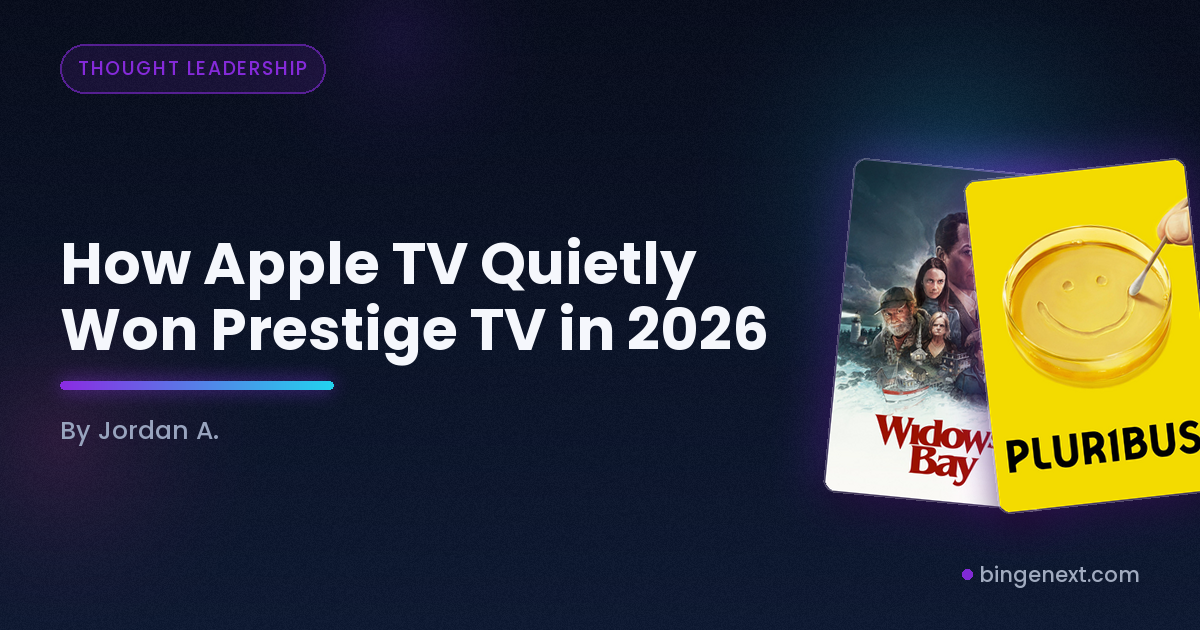
Widow's Bay is the cleanest evidence. Apple's horror comedy landed 19 nominations, the most of any new show this year, with Matthew Rhys and Kate O'Flynn both recognized. A first-season show with no franchise behind it, no comic book, no existing fanbase, and it out-nominated things with a decade of goodwill.
One breakout like that does more for a service than eight competent shows nobody finishes. It gives people a reason to subscribe this month rather than someday. It gives critics something to argue about. And it makes the next Apple pitch meeting easier for the next writer with a strange idea.
Pluribus: betting on a person, not a format
The other half of the argument is Pluribus. Vince Gilligan's series ran nine episodes across late 2025, put Rhea Seehorn in the lead, and picked up 18 nominations including Outstanding Drama Series. Nobody at Apple could have run that through a model and gotten a green light. You green light it because it's Gilligan and Seehorn and you get out of the way.
Apple ended up with three of the eight Outstanding Drama Series slots this year, with Pluribus, Slow Horses and Your Friends & Neighbors, plus three of eight in comedy with Widow's Bay, Shrinking and Margo's Got Money Troubles. Six of sixteen top-category slots from a company that barely existed in television eight years ago.
Why a small slate beats a big one
Volume strategies assume discovery works. They assume that if you make 200 things, viewers will find the good ones. Anyone who has opened a streaming app at 9 p.m. knows how that goes. The good ones drown.
A small slate flips the math. When a service releases roughly one significant title a month, every release gets marketing, gets a press cycle, gets to be the thing people talk about for two weeks. Apple can put a show on billboards because there's only one show to put on billboards. That isn't artistry, it's arithmetic, and the rest of the industry is currently proving the inverse in public. We wrote about how this shift started in the golden age of prestige TV.
The Ted Lasso complication
Then there's the part that cuts against the thesis. Ted Lasso came back on August 5 with ten weekly episodes running to an October 7 finale, three years after a season 3 that was sold as a complete ending. Reviving a show that finished is the single most volume-brained move available, and Apple made it.
To be fair, they changed the premise instead of rerunning it. Ted's coaching a second-division women's team now, which at least gives the season something to be about. But if season 4 lands flat, the reasonable read is that Apple's discipline has a price ceiling, and that ceiling is a franchise that prints subscriptions.
What Apple still doesn't have
Depth. That's the whole gap, and it's a big one.
Nielsen's chart for the first half of 2026 was topped by Stranger Things, Bluey, The Pitt, Grey's Anatomy and The Big Bang Theory. Four of those five are library titles or long-running series with hundreds of episodes. That's the viewing that fills the hours between prestige releases, and Apple has almost none of it. Nobody puts on a comfort rewatch of a nine-episode drama from last November.
It also costs $12.99 a month, a price Apple set in August 2025, and its biggest drama is missing this cycle entirely. Severance season 3 has been filming through 2026 with reporting pointing to a 2027 return, which means the show most people associate with the service contributed nothing to this year's haul. If you're waiting on it, our shows like Severance list is the stopgap.
So should you subscribe?
Yes, in bursts. Apple TV is the clearest example of a service you should treat as a season ticket rather than a utility. Subscribe when there are three things you want, watch them properly, cancel, come back. Right now that stack is real: Ted Lasso weekly through October 7, Brothers arriving September 23, and the Widow's Bay and Pluribus seasons everyone will be arguing about when the Emmys air September 14. Our running guide to the best Apple TV shows of 2026 tracks what's actually worth the month.
The bet Apple is making
Apple is wagering that in a market with fewer, bigger services, the winner isn't the one with the most titles. It's the one whose name on a show means something specific. That's the HBO playbook from 2002, run by a company that can afford to lose money on it for a decade.
Two things would break it. Severance slipping again, or Apple deciding that 19 nominations is a reason to make forty shows instead of twelve. Watch which one happens first.
Whatever you subscribe to this fall, the picking is still the hard part. Tell us two shows you loved and we'll hand back a short list worth your Wednesday: start with TV recommendations.
Topics covered: apple tv plus, emmys 2026, streaming strategy, prestige tv, industry
About the author
Jordan A., Founder, BingeNext
Jordan A. is the founder of BingeNext and is responsible for every guide published on this site. He built the recommendation engine after one too many nights lost to the streaming menu. Dates, season counts and where-to-watch details in these guides are checked against official sources before publishing, and corrections are welcome at Jordan@Bingenext.com.