Ideas
Stranger Things Is Over. What Replaces It at Netflix?
By Jordan A. · · 5 min read
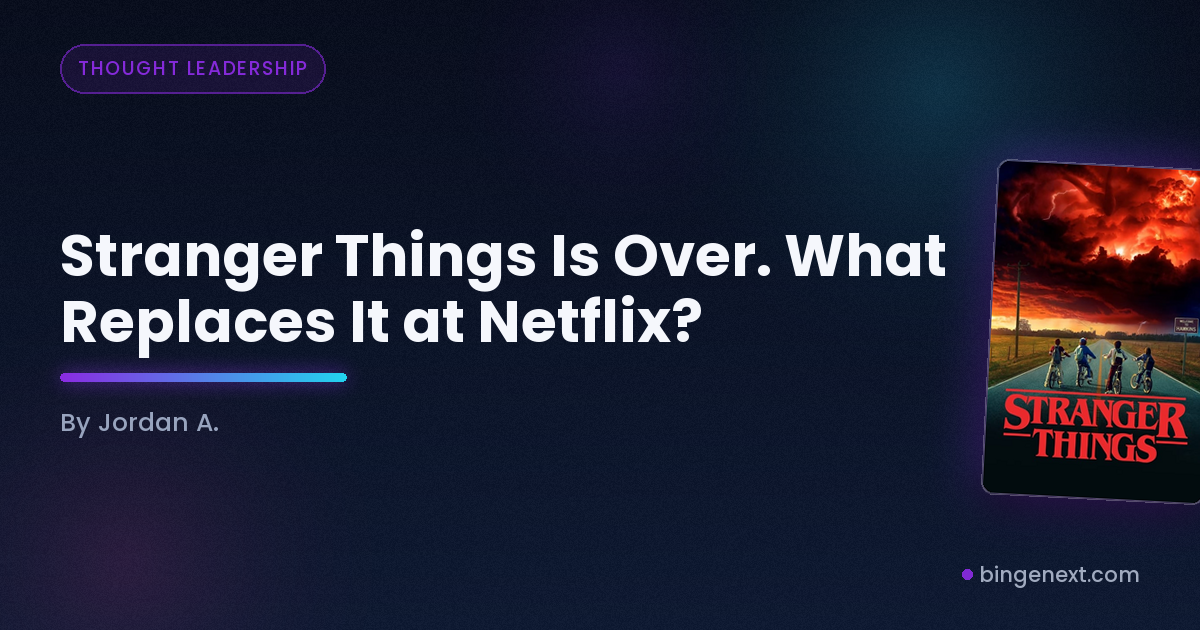
Stranger Things ended on December 31, 2025. Netflix put the finale in theaters, the internet cried about Hawkins for a week, and that was supposed to be that.
Then Nielsen published its numbers for the first half of 2026 and Stranger Things was the most-streamed series in America. Not the most-streamed finished series. The most-streamed series, full stop, beating everything that actually aired new episodes this year.
The result that shouldn't make sense
Nielsen clocked 23.26 billion viewing minutes for a show with nothing new to offer after December 31. Bluey came second at 22.81 billion, The Pitt third at 21.12 billion, both of them with fresh episodes in the window.
Some of that is January, when everyone was catching up on the last season. Most of it isn't. Six months of viewing at that scale is people starting the show from the beginning, and rewatching, and putting it on because it's there. Variety reported the series passed 1.2 billion total views across its run ahead of the finale. That's a decade of accumulation paying out after the meter stopped.
Finished shows are the best asset Netflix owns
Here's the uncomfortable conclusion for a company built on new releases: the most valuable thing in the library is a completed series with a lot of episodes and no reason to wait.
A running show has a cost. Every season is a new production budget, a new marketing push, a new chance to disappoint. A finished show costs nothing to keep and never disappoints anyone twice. It also has the one quality no new release can buy, which is permission. Nobody has to worry about committing to something that might get cancelled at season 2.
That's why the top of Nielsen's chart is full of library titles. It's also why ending a show well is worth more than dragging it out. The shows that stumble across the finish line get rewatched less, and we've written before about how series finales go wrong and what it costs.
What the fall slate says about the plan
Netflix's fall 2026 lineup tells you exactly how the company is thinking. The Gentlemen returns September 3, Monster: The Lizzie Borden Story arrives September 17, Unabomber lands September 25 and Lupin comes back October 23.
Look at that list again. Two are returning seasons of shows that already worked. Two are true crime. There's nothing on it that a viewer would describe as a swing.
That's not incompetence. It's a hedge. Netflix also spent last winter deciding not to buy its way to a bigger library, declining to raise its $82.7 billion bid for Warner Bros. Discovery in February. So the strategy is clear enough: rather than one enormous bet, run a portfolio of medium ones and let the library do the heavy lifting.
The franchise problem
The portfolio is producing hits. It just isn't producing another Stranger Things.
One Piece season 2 premiered March 10 and drew 16.8 million views in four days, topping the global chart. Bridgerton finished sixth on Nielsen's half-year list with 17.15 billion minutes and is renewed through a sixth season. Monster keeps generating a news cycle every time a new subject is announced.
All good outcomes. None of them are the thing Stranger Things was, which is a show your coworkers, your niece and your mother-in-law were all watching at the same time. The franchises Netflix has now are big inside their own audiences and invisible outside them.
Why building the next one is harder than it was
Stranger Things had advantages that no longer exist. It launched in 2016 into a much emptier calendar. It had nine years to grow, with gaps long enough that each return felt like an event. And it grew up with its cast, which is why the finale hit people who hadn't thought about the show in years.
Now compare that to how Netflix releases things. Full seasons drop at once, get consumed in a weekend, and vanish from the conversation by Thursday. That model is great for a launch spike and terrible for building the kind of nine-year attachment that produces 23 billion minutes after a show is over. You can't accumulate cultural weight in 72 hours.
The company knows this, which is why it has been splitting seasons into parts. That's a patch, not a fix. If you're still chasing the specific feeling, shows like Stranger Things is the closest thing we've got to a replacement list.
What it means for what you get recommended
Practical consequence: your Netflix homepage is going to keep showing you finished shows, and that's fine. The algorithm is optimizing for completion rates, and completed series with lots of episodes win that metric every time.
The risk is that it narrows. A homepage tuned to guaranteed engagement will show a hundred million people roughly the same twelve titles, and the strange new thing gets buried under the safe old thing. That's the trade you're making when you let one service pick for you. Our current shortlist of what's worth your time there lives in the best Netflix shows of 2026.
So what actually replaces it?
Probably nothing, and that's the real answer. The next Stranger Things won't be a Netflix show that gets announced as the next Stranger Things. It'll be something that runs for six years while people slowly decide it matters, and the metric it'll break won't be launch views. It'll be the one Stranger Things just broke: viewing after the ending.
Netflix's job for the next three years is to keep something on the air long enough for that to happen. Its instincts, and its release model, both point the other way.
While the industry figures out its next obsession, you still need something to watch tonight. Give us two shows you loved and we'll hand back a short list instead of a wall of thumbnails: start with TV recommendations, or keep it handy with the iPhone app.
Topics covered: stranger things, netflix, streaming strategy, franchise, industry
About the author
Jordan A., Founder, BingeNext
Jordan A. is the founder of BingeNext and is responsible for every guide published on this site. He built the recommendation engine after one too many nights lost to the streaming menu. Dates, season counts and where-to-watch details in these guides are checked against official sources before publishing, and corrections are welcome at Jordan@Bingenext.com.