Ideas
Why the Classic Sitcom Reboot Is Everywhere Now
By Jordan A. · · 4 min read
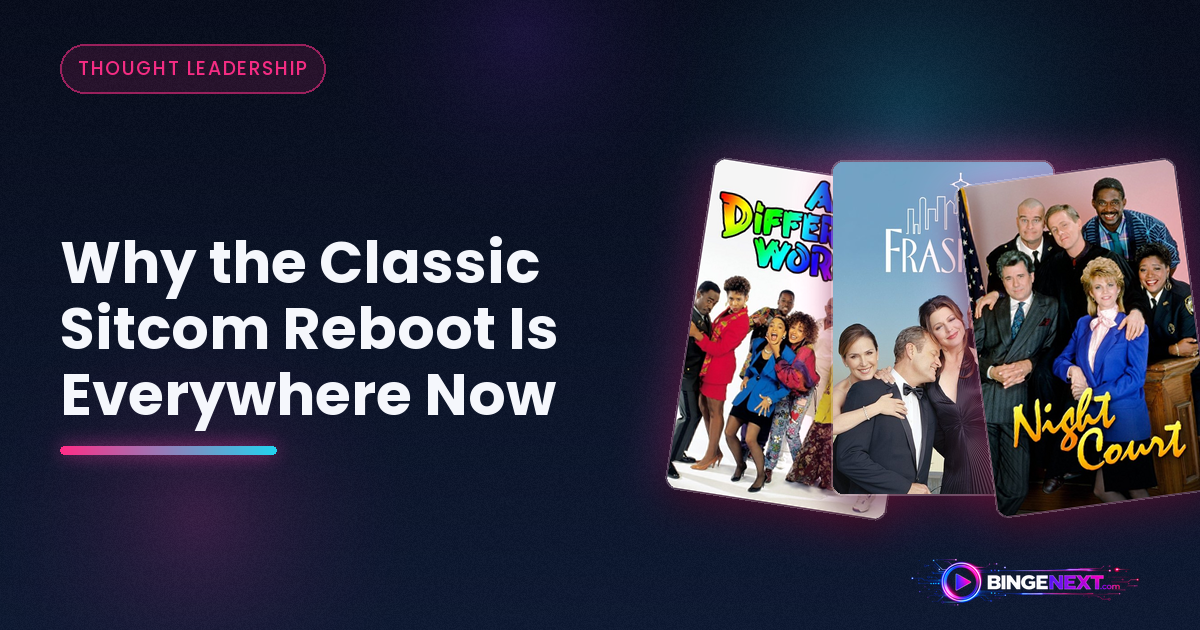
Hillman College is open for enrollment again, and the whole industry is taking notes. Netflix's revival of A Different World landed at No. 3 on the Top 10 shows chart for the week of September 28, pulled in 5.1 million views, and was renewed for a second season almost immediately. It is the latest and loudest proof of a trend that has been building for years: the classic sitcom reboot is no longer a risky nostalgia play. It is a core strategy. The question worth asking is why, and what it says about how we watch now.
The A Different World revival did not come out of nowhere. It arrived into a landscape already crowded with resurrected comedies. NBC brought back Night Court with Melissa Rauch stepping into the courtroom her late screen father once ran. Paramount gave Kelsey Grammer a second life as Frasier Crane. Netflix spun That 70s Show into That 90s Show and turned Full House into Fuller House. Each of these bet that a familiar name could cut through the noise of an overstuffed streaming menu, and more often than not, that bet is paying off. So what is actually driving the revival boom, and why now?
A Different World proved the model still works
Start with the numbers, because they are the clearest argument. A nearly forty-year-old sitcom concept, rebuilt for 2026, became one of the most-watched shows on the planet within weeks and earned a second-season order before the first had finished its run. That is not nostalgia as a gimmick. That is a franchise with a durable, multigenerational audience, parents who loved the original watching alongside kids discovering Hillman for the first time. When a revival performs like that, every other streamer starts scanning its own vault for the next one.
Comfort is the entire appeal
The deeper reason is simpler than any business case. People are tired, the world feels loud, and a familiar sitcom is a soft place to land. There is real psychological pull in returning to characters and settings you already love, a kind of low-stakes comfort that a brand-new show has to work much harder to earn. A reboot arrives pre-loaded with warmth. You already know these people, or you know their world, so you can relax into it immediately instead of spending three episodes deciding whether you even like anyone. In an era of decision fatigue, when the hardest part of the night is often just choosing what to watch, that instant familiarity is worth a lot.
Streamers are mining their own libraries
There is also cold economic logic at play. Every major streaming service is sitting on decades of beloved catalog titles, and reviving one turns a dormant asset into fresh, marketable content. The intellectual property already exists, the audience awareness is already there, and the marketing practically writes itself. Compare that to launching a wholly original comedy, which has to build recognition from zero in a market where thousands of titles are fighting for the same attention. From a studio's point of view, a reboot is a shortcut through the hardest part of the job.
The built-in audience lowers the risk
That shortcut matters more than ever because the economics of television have tightened. Streamers are canceling shows faster and greenlighting more cautiously, so anything that reduces uncertainty looks attractive. A revival comes with a guaranteed curious audience on day one, the millions of people who will click just to see how their old favorite turned out. Even a mixed reception still generates the kind of conversation and sampling that a new title would kill for. In a risk-averse moment, a known quantity is the safest money a studio can spend.
The best revivals update instead of repeating
Here is the catch, though. The reboots that actually last are the ones that have something new to say. A Different World works because it is not just cosplaying the original, it is telling a current story about a new generation at Hillman, using the old framework to talk about today. The lazy revivals, the ones that just reheat old catchphrases and coast on recognition, tend to fizzle after the initial curiosity fades. Audiences will show up for nostalgia once, but they only stay for a show that respects both the past and the present. The trick is to treat the original as a foundation to build on, not a museum piece to dust off, and the revivals that understand that difference are the ones still standing a season later.
Where the trend goes from here
The reboot wave is not slowing down, and the success of A Different World all but guarantees more greenlights for dormant comedy brands. The healthiest version of this future is one where revivals coexist with bold original comedies rather than crowding them out, where a familiar name becomes a doorway to new voices rather than a replacement for them. For now, the verdict is clear: a great sitcom concept is a renewable resource, and the ones built with real care are some of the most comforting television being made. If you want the longer view, our piece on why we love remakes and reboots digs into the psychology, and our look at the golden age of prestige TV covers the other end of the spectrum. Craving the comfort-watch version yourself? Our guide to shows like The Office is full of it. Or let BingeNext find your next cozy binge across every service. Find something to watch and settle in.
Topics covered: sitcom reboots, a different world, nostalgia tv, streaming trends, tv revivals
About the author
Jordan A., Founder, BingeNext
Jordan A. is the founder of BingeNext and is responsible for every guide published on this site. He built the recommendation engine after one too many nights lost to the streaming menu. Dates, season counts and where-to-watch details in these guides are checked against official sources before publishing, and corrections are welcome at Jordan@Bingenext.com.