Ideas
Why Toy Brands Keep Becoming Movies
By Jordan A. · · 4 min read
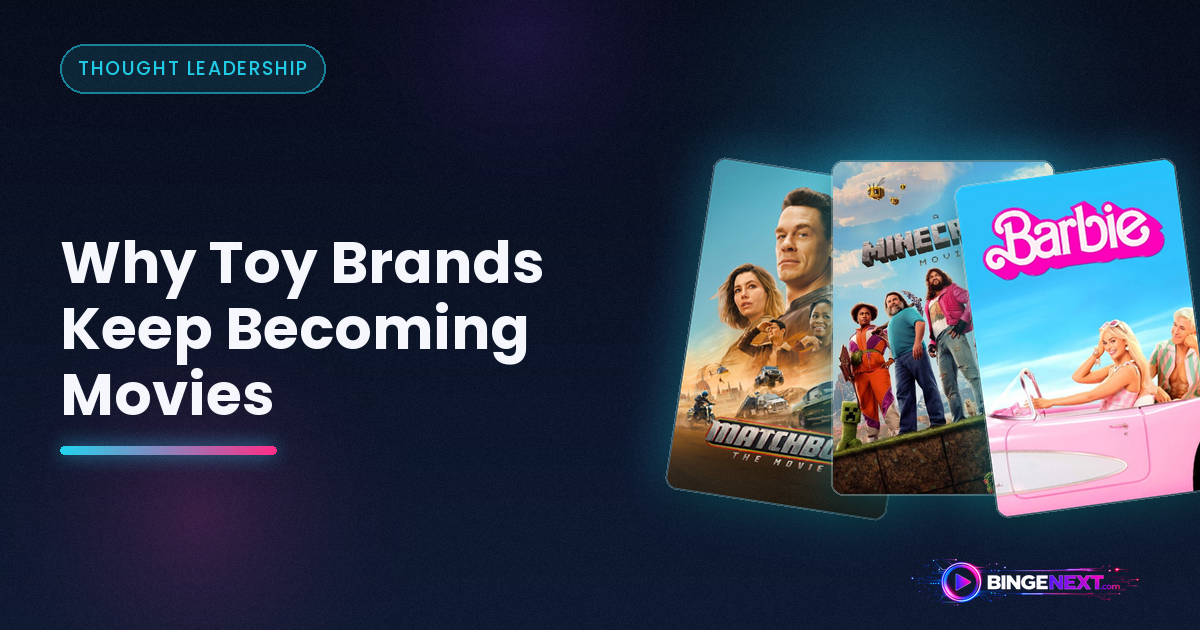
This week John Cena headlines Matchbox, a globe-trotting action movie built around a line of die-cast toy cars that has existed since 1953. A few months ago, a film based on a block-building video game became one of the biggest openings of the year. If you feel like Hollywood is scraping the toy box for ideas, you are not wrong. But the more interesting question is not whether this is happening. It is why it keeps working, and why studios will not stop any time soon.
The brand is the marketing budget
Making a movie is a gamble. The single most expensive and uncertain part is getting anyone to care that it exists. A known brand solves that before a frame is shot. When Matchbox or A Minecraft Movie arrives, it does not have to explain itself. Three generations already have a feeling about the name. The studio is not buying a toy, it is buying decades of built-in recognition, which is worth more than almost any star. Familiarity is the cheapest marketing there is, and a legacy brand hands it over for the price of a license.
Barbie proved the ceiling was higher than anyone thought
For a long time the toy movie was a punchline, the domain of loud robots and board-game adaptations nobody asked for. Then Barbie happened in 2023 and rewrote the math entirely. It showed that a toy property, handed to a real filmmaker with a real point of view, could become a cultural event and a billion-dollar hit at once. Every toy movie greenlit since lives in that shadow. We dug into what made it click in our look at movies like Barbie, and the short version is that the brand was the doorway, not the destination.
The game adaptations cracked the code too
Video games spent decades as the graveyard of bad adaptations. That era is over. A Minecraft Movie, directed by Jared Hess and starring Jason Momoa and Jack Black, posted the biggest opening weekend a video-game movie had ever seen, then rolled onto streaming and kept finding audiences. The lesson studios took is simple: a property with a devoted fanbase and a flexible world is a renewable resource. You are not adapting a story, you are adapting a sandbox, and a sandbox can hold a dozen movies.
Why toys and games specifically
There is a reason the trend favors toys and games over, say, kitchen appliances. A toy or a game is a world a child already played inside. The imaginative work is done. You spent hours deciding who the Matchbox cars were and where they were going, or building a universe block by block. The movie just dramatizes play you already did. That emotional head start is why these properties convert so well, and why a film can lean on a thin premise and still land. The audience fills in the feeling for free.
It is the same engine as the reboot
The toy movie is a close cousin of the remake, and it runs on the same psychology we unpacked in why we love remakes and reboots. In an expensive, risk-averse business, the safest bet is a thing people already recognize. A reboot recycles a story. A toy movie recycles a feeling. Both let a studio walk into opening weekend with an audience that already showed up once, which is the entire game when a single flop can sink a quarter.
The risk hiding inside the strategy
None of this is a guarantee. For every Barbie there is a pile of brand films that assumed recognition alone would carry them and learned otherwise. Nostalgia gets you the opening weekend. It does not get you the word of mouth. The toy movies that endure are the ones that treat the brand as a starting point and then bother to tell a real story, the way the best superhero films did when the genre matured, a shift you can trace through our picks for movies like The Batman. A logo opens the door. A good movie is what makes anyone stay.
Where this goes next
Expect more, not less. As long as a recognizable name lowers the risk of a greenlight, the toy aisle and the game library will stay prime real estate. The healthy version of this trend is the one where studios keep handing these brands to filmmakers with actual ideas, as they did with Barbie. The cynical version is a decade of hollow logos chasing the same opening-weekend magic. We will get both, and the audience will decide which ones survive past Friday, same as always.
What it means for the rest of the slate
Every dollar a studio pours into a sure-thing brand is a dollar it does not spend on an original idea, and that trade-off is the real cost of the trend. The counterargument is that a monster hit like Barbie funds the riskier bets, that the toy movie is the tentpole paying for the small films nobody would greenlight otherwise. Both things are true at once. The toy aisle is a safety net and a crutch depending on the year, and the only honest verdict is that it depends entirely on who gets handed the keys. A brand in the right hands is a gift. In the wrong ones it is a two-hour commercial.
If all these brand movies have you curious which ones are actually worth two hours, that is a question worth answering with taste instead of nostalgia. BingeNext reads across every service to tell you which toy and game adaptations are genuinely good and where to watch them. Get movie recommendations and skip the ones coasting on the logo.
Topics covered: toy movies, matchbox, a minecraft movie, barbie, movie trends
About the author
Jordan A., Founder, BingeNext
Jordan A. is the founder of BingeNext and is responsible for every guide published on this site. He built the recommendation engine after one too many nights lost to the streaming menu. Dates, season counts and where-to-watch details in these guides are checked against official sources before publishing, and corrections are welcome at Jordan@Bingenext.com.