Ideas
Why True Crime Still Rules Streaming in 2026
By Jordan A. · · 4 min read
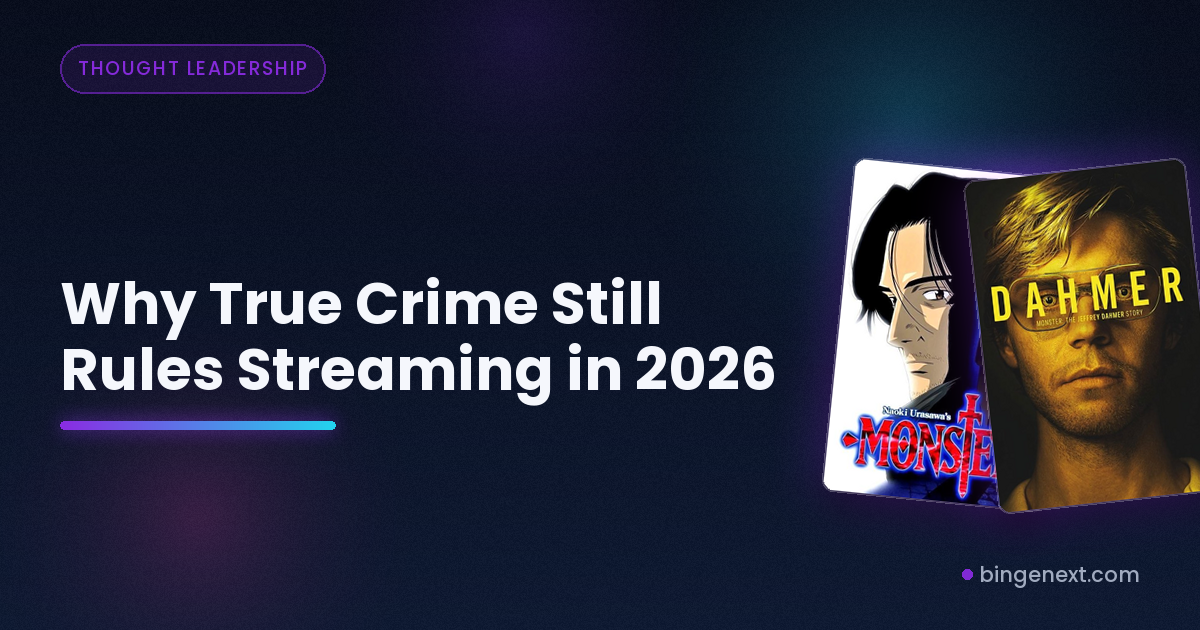
On September 17, 2026, Netflix drops Monster: The Lizzie Borden Story, the fourth season of Ryan Murphy's true crime anthology in four years. Think about that pace. In an industry that cancels hit dramas after two seasons, one brand has turned real-life killers into a reliable, renewable event. That is not an accident, and it says something about where streaming has landed. True crime is not a trend anymore. It is infrastructure.
Here is why the genre keeps winning, and why that win is more complicated than the view counts suggest.
The demand is proven, so the supply never stops
The clearest evidence is the Monster machine itself. Ella Beatty steps in as Lizzie Borden this year, following seasons built around Jeffrey Dahmer, the Menendez brothers, and Ed Gein. Four seasons on the same shelf tells you the audience shows up every time, regardless of the specific case. Streamers chase certainty above almost everything else, and a format that delivers a guaranteed audience is worth more to them than a risky original. When something reliably works, they build a factory around it, and that is exactly what has happened here.
The charts back it up week after week
It is not just the prestige dramatizations. Look at what actually climbs the Netflix Top 10 on any given week and you will find a crime story near the top. This week it is I Will Find You, the latest Harlan Coben adaptation, hitting a new high on the list. Coben has practically become his own genre on Netflix, a steady pipeline of twisty thrillers built on ordinary people and buried secrets. The fact that these titles chart again and again, with barely any marketing, is the strongest signal a platform can get. Audiences do not need to be convinced to click on a mystery.
The psychology is older than streaming
None of this started with Netflix. People have gathered around grim stories since the penny dreadfuls and the newspaper murder trials of the 1800s, which is fitting given that the Borden case itself is from 1892. The pull is human. A crime story is a puzzle with the highest possible stakes, and our brains are wired to want the solution. It also lets us rehearse fear from a safe distance, to sit with the worst thing that can happen while knowing it is not happening to us. Streaming did not invent that instinct. It just made an endless supply available at the tap of a remote, and the recommendation engines learned fast that a good mystery keeps you on the couch. We break down how those systems shape your queue in our look at how algorithms curate your streaming.
It travels across every audience
Part of the genre's staying power is how widely it reaches. A true crime hit does not belong to one demographic the way a superhero show or a teen drama might. It cuts across ages and tastes, which makes it some of the most valuable content a platform can own. When we looked at streaming habits by generation, crime and mystery kept surfacing as common ground, one of the few things a household with very different viewers can usually agree on. That broad appeal is catnip for a service trying to keep an entire family subscribed.
The uncomfortable part
Here is where it gets harder. The same Monster seasons that draw millions have also drawn real criticism, particularly from the families of victims, who have said the dramatizations reopen the worst days of their lives without their consent. That tension is baked into the genre. Every true crime hit is built on someone's real grief, and the more entertaining the packaging, the easier it is to forget that. The best of these projects wrestle with that responsibility. The worst treat tragedy as raw material. As viewers, it is worth holding both things at once, the pull of a gripping story and the fact that it really happened to real people.
The documentary side of the genre often handles this better, giving victims and investigators an actual voice rather than a script, which is one reason those titles hold up. Our roundup of the best documentary shows of 2026 is full of examples that earn their subject matter instead of exploiting it.
Where it goes next
The genre is not slowing down, but it is maturing. Expect more historical cases like Lizzie Borden, which put enough distance between the story and the present to soften the ethical sting, and more hybrids that blend drama with documentary. The appetite is permanent. The question is whether the industry keeps feeding it thoughtfully or just keeps feeding it. Either way, true crime has earned its place at the center of streaming, and it is not giving that spot back any time soon.
The viewer's part in all this
None of this works without an audience that keeps showing up, which means viewers have a little more power here than it feels like. The projects that get made are the ones that get watched, so the difference between careful true crime and outright exploitation is partly a demand problem. Choosing the series that give victims a voice over the ones that treat them as set dressing is a small vote, but it is a real one. The genre is going to keep being made either way. What kind of it gets made is still up for grabs, and that is decided one click at a time.
If you want the genre without the guilt of a bad pick, let BingeNext point you toward the true crime titles that treat their stories with actual care. Explore BingeNext and find the ones worth your time.
Topics covered: true crime, monster anthology, streaming trends, ryan murphy, netflix
About the author
Jordan A., Founder, BingeNext
Jordan A. is the founder of BingeNext and is responsible for every guide published on this site. He built the recommendation engine after one too many nights lost to the streaming menu. Dates, season counts and where-to-watch details in these guides are checked against official sources before publishing, and corrections are welcome at Jordan@Bingenext.com.