Ideas
Why Long Gaps Between Seasons Are Backfiring
By Jordan A. · · 4 min read
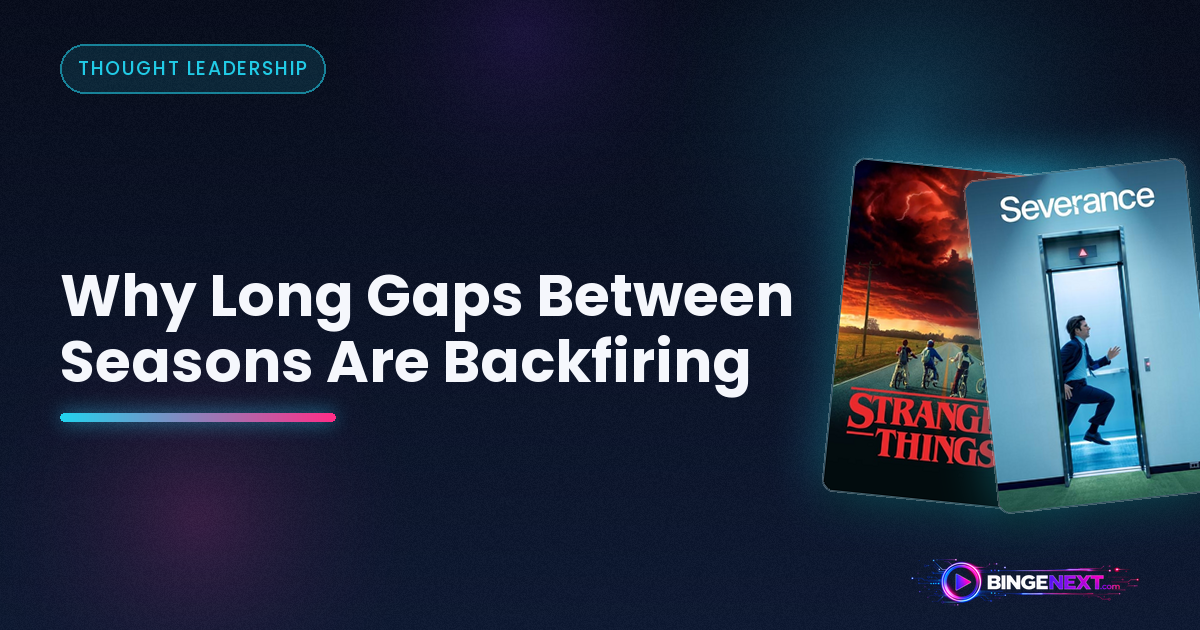
Try to remember where the plot of your favorite show left off. If it took you a second, you are not forgetful. You are living through the era of the three-year season gap, where a series can vanish for so long that catching up feels like homework. And now there is hard data suggesting these marathon waits do exactly what fans feared: they cost shows their audience.
Three years is the new normal
The examples are not fringe cases. Severance left fans hanging for nearly three years between its first and second seasons, going dark from 2022 until 2025 with nothing but theories to chew on. Stranger Things has been in the middle of a roughly three-year gap between Seasons 4 and 5, stretching a story that once returned like clockwork into a years-long endurance test. Netflix has kept the world warm with side projects, including a new animated spinoff arriving this week, but the flagship wait has still been enormous.
What used to be a quirk is now the pattern. A prestige drama returns, ends on a cliffhanger, and then simply disappears for the length of a college degree. Viewers have noticed, and so, finally, have the companies.
The data says it backfires
This is where it gets interesting. A recent Luminate report found that long gaps between seasons are driving real losses in viewership, and industry reporting has pointed to a rough threshold: once a wait stretches past about a year and a half, hit shows start bleeding audience. An Ampere analysis nicknamed it the Stranger Things effect and studied the gaps behind giants like Wednesday and Severance.
The honest wrinkle is that the very biggest shows can defy it. Ahead of its final season, Stranger Things saw viewing surge as people rewatched to prepare. So the takeaway is not that gaps kill every show. It is that only a rare few are strong enough to survive them, while everything below that tier quietly loses steam. If you are not a cultural event, a long absence is a slow leak.
Why the gaps got so long
The reasons are real, even when the results are frustrating. Streaming dramas now shoot like feature films, with the budgets, effects, and schedules to match. A single season can take a year or more just to film and finish. Add A-list casts whose movie commitments have to be worked around, plus writing and production timelines that no longer bend to a fixed fall calendar, and the delays pile up fast.
There is also a structural cause. When a show drops all its episodes at once and then goes away, there is no weekly rhythm forcing the machine to stay in motion. The next season starts from a cold engine every time, and cold engines take a while to turn over.
What the wait does to a show
Momentum is the thing that dies first. A series lives in the conversation, in the memes and recaps and group chats, and all of that fades in a long silence. By the time a show returns, the cultural moment it built has cooled, and a chunk of the audience has moved on to the next thing. Worse, people forget the plot. When starting a new season requires a refresher course, plenty of viewers simply do not bother.
That is the quiet damage. It is not that people hate the show. It is that the emotional thread snaps, and a snapped thread is hard to retie. The counterexample proves the rule: one recent series that returned after just a nine-month absence came back to a 200 percent jump in viewers, precisely because it never gave the audience time to drift.
How to cope as a viewer
You cannot speed up a production, but you can protect your own experience. A few moves help.
- Wait and binge. If a show is prone to long gaps, consider letting a couple of seasons stack up, then watching them close together so the story stays fresh.
- Use a recap before you return. A five-minute refresher rebuilds the plot faster than white-knuckling your way through a confusing premiere.
- Follow shows that respect your time. Series with tighter turnarounds, or weekly releases, keep the momentum going and keep you in the story.
If you tend to lose the thread, our guide to catching up before a season finale is built for exactly this problem. And if you have wondered why some services are leaning back into weekly drops, our piece on the return of weekly episodes explains the strategy behind it.
It is worth saying plainly: a shorter wait is not a lesser show. Some of the most beloved series in television history returned every single year, and the affection for them only grew with each reliable comeback. Speed and quality were never enemies, whatever the current release schedules seem to imply. A show that respects your time is not cutting corners. It is keeping a promise.
The bottom line
The long gap was supposed to signal ambition, a sign that a show was too big and too polished to rush. The data now says it is a gamble, and only the biggest names win it. For everyone else, disappearing for three years is a good way to be forgotten. The smartest studios are starting to shorten the wait, and viewers should reward the ones that do.
Tired of losing track of shows that vanish for years? BingeNext keeps your place across every service and tells you what is actually back. Explore BingeNext and never lose the plot again.
Topics covered: long season gaps, tv release schedules, streaming release strategy, binge culture, viewership trends
About the author
Jordan A., Founder, BingeNext
Jordan A. is the founder of BingeNext and is responsible for every guide published on this site. He built the recommendation engine after one too many nights lost to the streaming menu. Dates, season counts and where-to-watch details in these guides are checked against official sources before publishing, and corrections are welcome at Jordan@Bingenext.com.